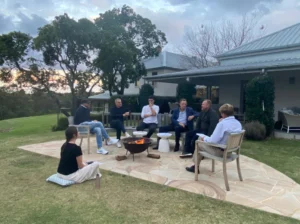
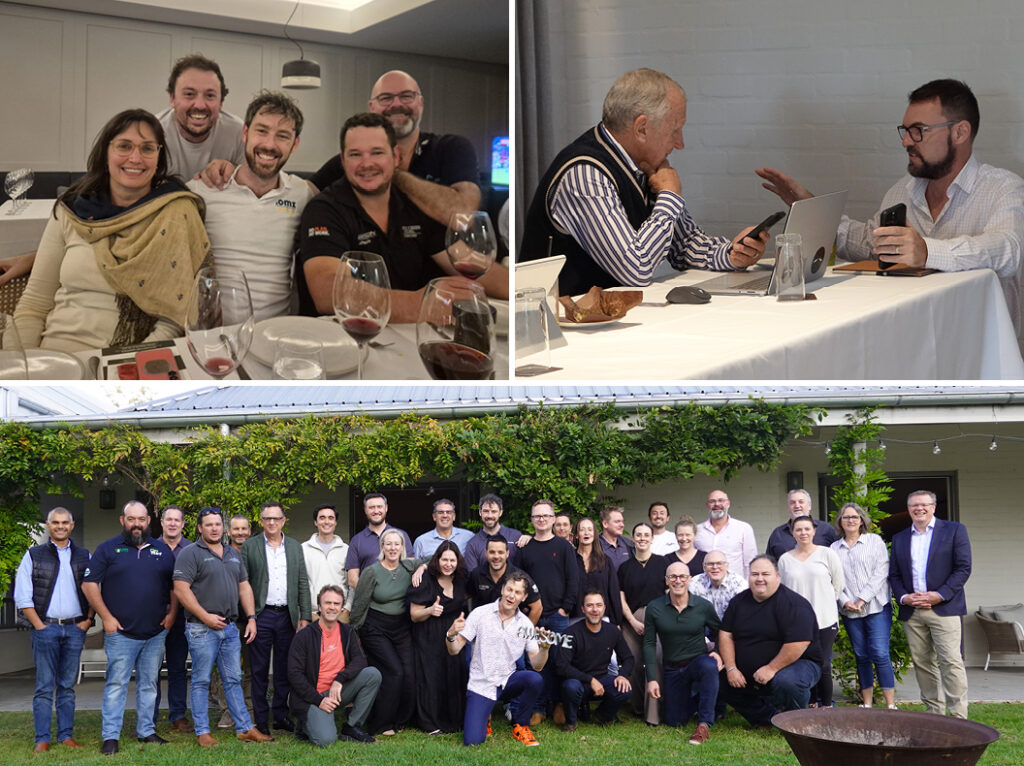
Last week, a group of business owners from the MYMAX Owner Manager Program gathered at Spicers Guesthouse in the Hunter Valley for OMX2026 – the annual event designed to give owners practical, real-world tools to take back to their businesses.
This year’s theme was AI and Automation, and what unfolded over three days was one of the most energising and grounding events we’ve run. Not because of the technology, but because of the people in the room and the conversations it sparked.
If you weren’t there, here’s what you missed. And why you should make sure you’re there next year.
The Event That Opened With a Challenge
The tone was set early. Owners were reminded from the outset that AI will not replace humans – but humans who use AI will outpace those who don’t.
That framing set up everything that followed. This wasn’t a program about technology in the abstract, it was about what owners can actually do right now in their business.
The Highlight Everyone Is Still Talking About
“If I Can Do It, You Can Too.”
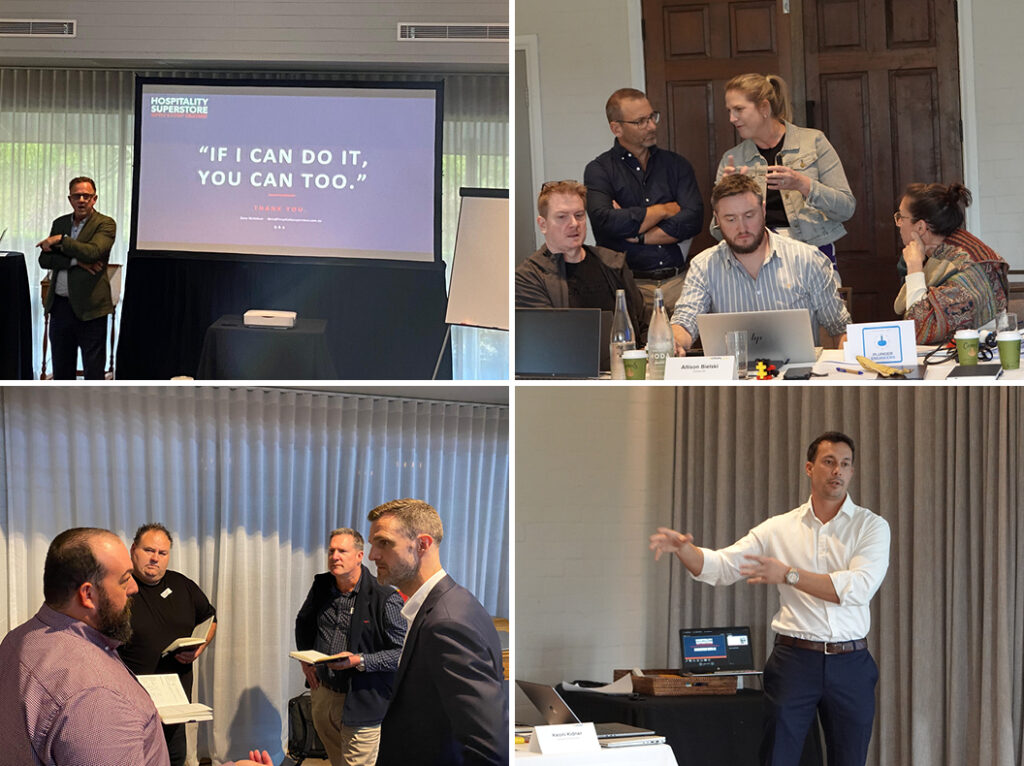
The standout moment of the program came from the Managing Director of Hospitality Superstore – a B2B wholesale business supplying cafés, restaurants, hotels and aged care facilities, with 75 years of operation behind it.
A great example of someone that is not an technology expert, but a business owner who decided to figure AI out.
In a candid, no-fluff presentation, he walked owners through exactly what his team built, what it cost, and what it returned:
- ~$6,000 in tokens over 4 months
- $600,000+ per year in estimated return
- Greater staff focus – saving approximately $425,000 per year
- Google Ads management brought in-house – saving monthly fees
- Zero IT support calls in the past two months
What made this resonate wasn’t the numbers. It was the who. The operations manager automated 70% of accounts payable. The GM built a price-merging app saving countless hours on price changes and the warehouse manager built a freight optimiser.
“Six builds. Six different people. None would have called themselves a developer six months ago.”
The message to the room was simple: start somewhere. Pick one thing, suggesting four entry points for owners:
- A personal AI assistant for the business owner
- A front-line AI embedded in tools the team already uses
- Back-office automation
- A low-risk AI side project to test the technology cheaply
Marketing With AI: Real Numbers From a Real Business
The same business also shared what AI had enabled within its marketing function. Before AI, there was a one-person marketing department up against competitors with bigger teams and bigger budgets. After implementing AI:
- 2.5x more clicks with the same marketing budget
- 72% reduction in cost per click
- YouTube view rate of 68% – nearly double the industry average of ~35%
- Paid ads now running consistently across Facebook, Instagram, Google, YouTube and LinkedIn
- Google Ads management brought fully in-house, eliminating thousands in external fees
- Showroom foot traffic in the past 30 days: the highest it has ever been
The business showed how they’ve created their own marketing department made up of AI agents – each with their own name and specialisation – Pedro handles Meta ads, Greg manages Google and Lilly looks after LinkedIn.
The message to other owners who manage their own marketing or work closely with a small team: smaller businesses have an advantage with AI. No approval chains, no red tape, deep brand knowledge, and the ability to move fast.
From Ideas to an AI Blueprint: The CLAID Sessions
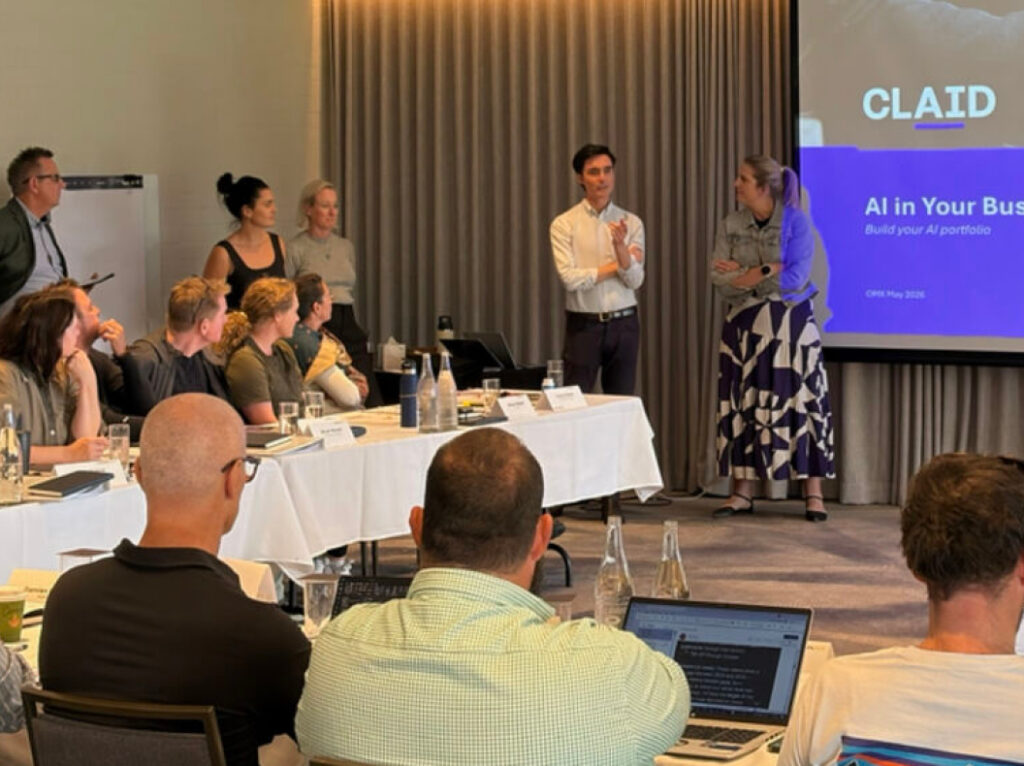
Beyond the inspiration, owners needed a practical path forward – and that’s where the CLAID team delivered including Nigel Heyn, Andrew Fullerton and Ashleigh Loughman.
Owners completed pre-event preparation before arriving at OMX, identifying tasks in their businesses where AI could potentially help. At the event, CLAID guided them through a structured process to turn those ideas into a scored, sequenced AI use case portfolio – a working roadmap for their business.
The framework pushed owners to ask the right questions:
- What’s the task, and how is it done today?
- What triggers it? What data does it need?
- What are the real risks if AI gets it wrong?
- How much would solving this actually matter?
- How complex would it be to build?
Each use case came out the other side with a verdict, an estimated ROI, and a target quarter to implement.
What patterns emerged across the room? Reporting and admin tasks kept surfacing as quick wins – high ROI, lower complexity. Customer service use cases were universally high value, but more complex than expected once owners thought through tone, escalation and data quality. Sales use cases, requiring nuance and relationships, consistently scored harder than owners anticipated.
The takeaway: most owners left with a clear, honest view of where to start – and it was often different from where they thought they’d begin.
Other Sessions That Shaped the Three Days
The program was packed with expert perspectives that added depth and balance:
- Toby Jenkins led owners through mindset work – the psychological flexibility needed to adapt, stay present, and make decisions that align with long-term goals rather than short-term comfort.
- Peter Sanderson from OneTeam IT gave a grounded view of AI in software development, making the case that AI accelerates both productivity and mistakes – which is exactly why guardrails and human oversight are non-negotiable. His closing line stayed with the room: “AI isn’t coming for your job. But someone who can use AI is.”
- Mathew Sayed from InlineCode tackled AI security head-on, covering the practical steps businesses need to take as AI tools become embedded in operations – and what insurers, boards and customers are now asking for.
- CLAID’s AI 101 session set the context for everyone, demystifying the technology with clarity: what AI actually is, how large language models work, where they fall short, and why foundations matter before building.
What No Agenda Can Capture
The content at OMX is deliberately practical. But every year, what owners say brings them back is something the schedule can’t contain.
It’s the conversations over dinner. The moment another owner describes a challenge you thought only you were carrying. The realisation that someone in the room has already solved the problem you’ve been sitting with for months.
There is something distinctly powerful about being in a room full of people who understand what it actually means to run a business. No performance. No posturing. Just honest exchange between people who get it.
That is what OMX is, at its core.
See You at OMX2027
If you’re part of the MYMAX Owner Manager Program network who hasn’t made it to OMX yet, this is your sign.
The tools are changing fast. The opportunity is real. And the people in that room are exactly the ones you should be thinking alongside.
Expressions of interest for OMX2027 open soon. Keep an eye on your inbox, or visit mymax.com.au/omx for updates.
OMX is an annual event for graduates of the Owner Manager Program. It is designed to deliver practical, expert-led content alongside the peer connection that makes the OMP community unique.