Owner Manager Program — There Is Never a Perfect Time

You’ll Do It Next Year.
That’s What You Said
Last Year.

The most common feedback from owners who complete OMP is that they wish they’d done it sooner. The most common reason they didn’t? The timing never felt right. It never does. And that’s exactly the point.
Limited Intake: Registrations Now Open

Exclusive to owners of privately held businesses with $5m–$100m revenue  |  Next intake limited to 20 participants

375+

Owners who have completed OMP

#1

Feedback:
“I wish I had done this sooner”

15+

Years running OMP —
we know how timing feels

0

Owners who said they
regretted doing it

In 15 years, we have never met an owner for whom the timing was perfect.

Every owner who has ever looked at OMP has had a reason why now wasn’t quite right. A major project. A key staff member leaving. A busy period coming up. A restructure underway. Something to sort out first.

We know this because we’ve heard it hundreds of times — and because the owners who eventually do OMP tell us the same thing with remarkable consistency: “I wish I’d done this years ago. I kept waiting for the right moment and there never was one.”

One owner looked at OMP for ten years before joining. When he finished the program, his exact words were: “I have wasted ten years.”

We’re not sharing this to create pressure. We’re sharing it because it’s true — and because the business and the life you would have built in those years is a real cost, even if it’s invisible.

What owners say before joining OMP

The Reasons Owners Give for Waiting — Addressed Honestly

We’ve heard every version of the timing objection. All of them are understandable. None of them hold up on examination. Here’s what we actually know about the most common reasons owners give for waiting.

Objection

"I just need to fix a few things in the business first."

This is the most common reason — and the most revealing one. The assumption is that OMP is something you do once the business is in order. In reality, OMP is the thing that helps you get it in order.

The program is designed to work on your business in real time — not in an abstract classroom. The issues you’re trying to fix first are often precisely what OMP is built to address. Waiting until things are sorted is a bit like waiting to feel well before seeing the doctor.

Objection

"We’ve got a big project on. Now isn’t the right time."

There is always a project. Always a period of change. Always something that feels like it makes the timing imperfect. In fifteen years of running OMP, we have never met an owner whose calendar was clear. The busyness is not temporary — it’s the nature of running a private business.

If anything, the presence of a major project is a reason to do OMP, not defer it. The strategic thinking, the leadership development, and the peer perspectives that come from OMP are exactly what you need when navigating complex periods — not after they’re over.

Objection

"I can’t take three days away, five times."

The time commitment feels significant before you’ve done the program. Most owners find it more manageable than their initial perception. But here’s the more direct truth: if the thought of being away from your business for three days five times over five months genuinely stops you — that tells you something important.

A business that cannot function without the owner for three days is a business that needs the owner to do OMP. The inability to step out is not a reason to stay in. It’s a reason to change how the business runs — which is exactly what OMP helps you do.

Objection

"Next year would be better timing for me."

It won’t be. Not because things won’t change — they will. But because the logic of “next year” will still apply next year. There will be a different project, a different busy period, a different reason why the next intake is more suitable than this one.

The owners who actually do OMP are not the ones who waited for the timing to be right. They’re the ones who decided that their own development was worth making the timing work — and who looked back a year later and struggled to believe they’d almost deferred again.

Objection

"We’re going through a lot of change right now."

Periods of change are often the best time to do OMP — not the worst. When the business is in flux, the clarity that OMP creates around strategy, people, and the owner’s role is disproportionately valuable. You’re making big decisions. OMP makes you better at making them.

Waiting for things to settle before investing in your own capability means leading through the hardest part of the transition with the thinking you had before. That’s the opposite of what the moment demands.

Objection

"I’m not sure I can justify the investment right now."

The cost of OMP is real. So is the cost of not doing it. Every year you defer is a year of running the business with the thinking and capability you have now — rather than the thinking and capability OMP creates.

The owners who’ve been through OMP consistently say the return — in clearer strategy, better decisions, stronger teams, and businesses that perform at a higher level — made the investment look small in hindsight. The question isn’t whether you can afford to do it. It’s whether you can afford to keep not doing it.

If timing is your concern, talk to us about it directly.
We’ll give you an honest answer — including if now genuinely isn’t the right time.

The invisible cost of waiting another year

Deferral feels costless because nothing appears to change when you defer. No invoice arrives. No bill comes due. The cost is invisible — which is why it’s so easy to keep paying it.

But the cost is real. Here’s what one year of deferral typically looks like across the areas OMP addresses.

Y1

Today — You defer

You have a reason. It feels legitimate. You tell yourself next intake will be better timed. Nothing changes. The business keeps running at the level your current thinking allows.

Y2

One year later — You look at it again

There’s a different project now. Or a different reason. The logic of “next year” is as convincing as it was last year. You defer again.

Y3

You finally commit

You complete OMP. It changes how you think about the business. And then you sit down and think about the last two years. “I have wasted two years.”

Strategy

Another year of operating without the strategic clarity OMP creates. Decisions made on instinct rather than structured thinking. A business that’s busy but not necessarily moving in the right direction.

People & Leadership

Another year of leading the way you’ve always led. The same patterns, the same limitations, the same ceiling on what your team can achieve under your current leadership. The best people leaving. The problems staying.

Business Performance

Another year of the business performing at the level your current capability and thinking allows — rather than the level OMP makes possible. Growth deferred. Value not created.

Owner Dependency

Another year of being the person the business cannot function without. Another year where you can’t step back, can’t take time out, can’t think clearly about the bigger picture because you’re too busy running it day to day.

What Owners Believed Before OMP — and What They Said After

This is the before-and-after on timing — drawn from what OMP alumni consistently report about their experience of the program and what they wished they’d known before they deferred.

What Owners Thought Before OMP

What They Said After OMP

The time commitment

—“Five residential blocks of three days — that’s a huge commitment. I don’t see how I can manage that on top of everything else I’m running.”

✓“It was more manageable than I thought. Once I’d committed to the dates, the business adapted. And the three days away turned out to be some of the most valuable thinking time I’ve had in years.”

The business without them

—“The business genuinely needs me there. Things will fall apart if I’m away for three days at a stretch. I’m not at a stage where I can step out like that.”

✓“The business didn’t fall apart. And realising that — actually experiencing it — was itself one of the most important things I took from the program. I’d underestimated my team and overestimated my own indispensability.”

Fixing things first

—“I want to get things in better shape before I do OMP. It’ll be more useful once I’ve resolved some of the current issues and the business is in a better position.”

✓“The things I was trying to fix first were exactly what OMP helped me fix. I was waiting for a set of outcomes that the program itself was designed to create. I should have done it when I first looked at it.”

The right time

—“Next year will be better. We’ve got a big project finishing up, and once that’s done I’ll be in a better position to invest the time and headspace in something like OMP.”

✓“There was a project the year before too. And the year before that. The right time was when I first looked at it. Every year I deferred, I paid for it in the business — I just couldn’t see the bill.”

The relevance of the content

—“I’ve been running this business for fifteen years. I’m not sure how much of this I don’t already know. I’m worried I’ll pay a lot of money for things I’ve already figured out.”

✓“I knew more than I realised going in — but I was applying it inconsistently, incompletely, and without the integrating framework that made it all make sense. OMP didn’t just teach me things. It changed how I think.”

The investment

—“It’s a significant cost and I want to make sure the timing is right before I commit. I’d rather wait until I’m sure I can get the most out of it.”

✓“I couldn’t have bought the advice I got in this program individually. The cost was real. The return was larger. In hindsight, the only expensive decision I made was waiting as long as I did.”

The single most common piece of feedback from OMP alumni is some version of the same sentence: “I wish I had done this sooner.”

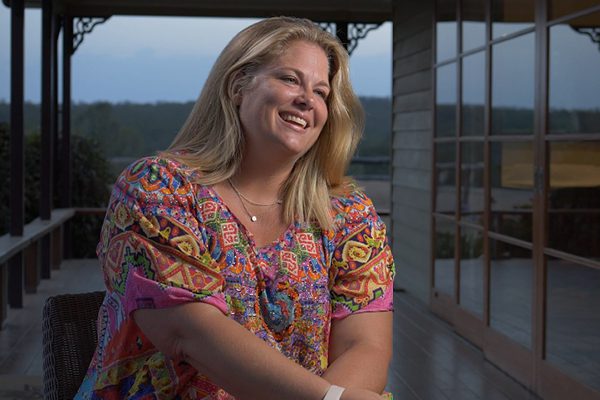
Susan Cottrell waited 3 years to do the OMP
yellow_quotes-2.png

“Anyone thinking about doing it, should just do it. I waited 3 years to actually jump in and do it, and wished I’d done it 3 years ago. It’s just been brilliant. 

Susan Cottrell - Private Business Owner - OMP'12

What the time commitment actually looks like

OMP runs over five months in five residential blocks of three days and two nights each. The sessions are held away from your business — by design, to give you the space to think clearly about it.

Between sessions, you apply what you’ve learned directly in your business. The work you do in OMP is the work you do on your business — in real time, on real problems. This is not an academic program. Nothing sits in a folder waiting to be implemented later.

Most owners find, once they’ve done the first session, that their initial concern about the time commitment doesn’t match their actual experience of it. The question isn’t whether you can find three days. It’s whether you’re willing to.

When is it actually the right time?

OMP is right for owners of privately held businesses with $5m–$100m in revenue who are serious about developing themselves and their business. There are almost no circumstances under which the timing is genuinely wrong for an owner at that stage.

The honest answer is that the best time was when you first looked at it. The second best time is now. Rob and Chris will tell you plainly if something in your situation genuinely makes this intake the wrong one — and they’ll tell you why.

Most of the time, the conversation reveals that the timing is fine. It’s the decision to commit that was the obstacle — not the calendar.

These owners found the time. Here’s where they came from.

Hear directly from OMP alumni about the decision to commit — and what they wish they’d done differently on timing.

Rob-Douglas-MYMAX-2.jpg

Rob Douglas

Chris-Robinson-MYMAX-2.jpg

Chris Robinson

Why we’re direct about this

Rob Douglas and Chris Robinson have been running OMP for over 15 years. In that time, we’ve had hundreds of conversations with owners who were considering the program — and hundreds with owners who had done it. The gap between what owners expected before and what they reported after is consistent, and it centres on one thing: timing.

We’ve seen what the years of deferral cost — not in any single dramatic way, but in the accumulated weight of decisions made without the thinking OMP creates, teams led without the capability OMP develops, and businesses that performed below what they were capable of because the owner hadn’t yet had the development the program provides.

We’re direct about this not to pressure anyone — but because we’ve watched too many good owners carry an unnecessary cost for too long. If you’re genuinely at the wrong stage or in the wrong circumstances for OMP right now, we’ll tell you. But if the real obstacle is timing, we’d rather have that conversation with you honestly than watch you defer for another year. 

The best time to do this was
when you first looked at it.
The second best time is now.

Have a conversation with Rob or Chris. If the timing genuinely isn’t right, they’ll tell you. If it is — don’t be the owner who looks back in three years and wishes they’d made the call today.

Book a Free Conversation About Timing

Tell us about your business and where you are right now. Rob or Chris will have a straight conversation with you about whether this intake makes sense — and if it doesn’t, they’ll tell you that too.